Showing posts with label gifts of infertility. Show all posts

17 July, 2023

No Kidding nights in July

No, this is not going to be X-rated. No, it's nothing to do with hot nights, or cold nights in my case, in the middle of our winter. Instead, it has everything to do with time zones, sports, and freedom. 

I've spent over the last week watching Wimbledon games. Due to our time zone here on the edge of the Pacific, the main matches all start around midnight or 1 am. If there are two matches I want to watch, I have to try and choose, or risk an entire night without sleep. If there is a big final, like last night, there is only the one match. But one match can still mean almost an entire night without sleep. I grabbed an hour or so on the couch before the final began at 1 am my time. Five hours later, when it finished, I watched all the presentations and speeches. Then when I crawled into bed at 6.30 am, I felt wide awake. Fortunately, the Husband got up shortly after, I had the bed to myself, and he went off to play golf so I didn't have to feel bad about sleeping for a few more hours.

Now, I'm fully aware I am ageing out of the "I wouldn't be able to do that if I had kids" statement. My last pregnancy ended 20 years ago. But it is feasible I could have still had a teenager in the house. I would have had to be quiet at least, I might have felt I needed to get up this morning (Monday) to be with them, or they might have woken me up talking to my early bird husband or getting out of the house to go off to university or work. So it would have been more difficult to indulge my love of Grand Slam tennis matches, even now. And I certainly wouldn't have been able to do it over last ten or twenty years since I stopped working in an office. 

These days, that's all academic. I don't dwell on the what-might-have-beens. I want to focus on the good things. Watching Grand Slam matches is a treat I have allowed myself for years now. I love the excitement of watching something live, as it happens. Being able to do so is a gift. I'm not kidding. 


27 June, 2023

Transformation from trauma

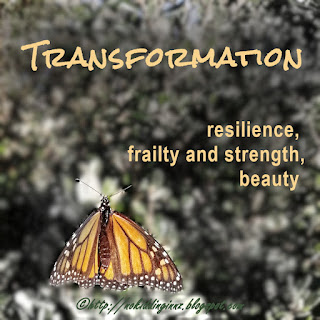
Jess at Finding a Different Path got me thinking about how we transform into beautiful butterflies after trauma and loss. Those of us who have been healing for years or even decades can attest to that.

Butterflies are a good metaphor, not only because of their transformations, but also because of their simultaneous delicacy and frailty, and their strength, as I've observed them flying quickly in strong winds, buffeted about, but surviving and flourishing. Those of us who have healed and embraced our No Kidding lives might be strong and beautiful butterflies, but we are also frail at times, as we carry the scars of trauma with us. The scars can heal into something beautiful, cause us to focus on other joys and benefits of our lives following loss and trauma. My Gifts of Infertility series written a few years ago focuses on that - the positives that come from our trauma, loss, and the life we never expected to have. But they are also reminders, and can hurt from time to time too. 

Going through the process of loss, disappointment, and often trauma, means that we are forever changed. We lose something in that process that I, for one, have never fully regained. Before my pregnancy losses and infertility, I'd almost always been in the happy majority. Sure I needed glasses, but I'd always been physically and intellectually lucky. Even though I can be a good worrier, deep down I also had a degree of blissful ignorance that so much of the population possesses. The world operates on our common belief that "it will never happen to us." That's how we can get in a car every day, or go on a date with a stranger, or splurge on something we can't really afford assuming there will always be new income, or take any of a myriad risks that make up modern day life. But infertility knocks that out of us. My ectopics brought me face to face with my mortality, which was a shock. I learned what it means to be on the wrong side of the odds, whether that is being one of the one in six couples who might experience infertility, or the one in 400,000 who has a repeat ectopic that is an interstitial ectopic. Jess called it being a "tiny percentage person." Once we've been that person, it is hard to ignore it again in the future. I absolutely relate to that.

It has affected me in a number of ways. Initially, when I was feeling very raw and vulnerable, I felt uncharacteristically lonely when I would travel internationally, especially if I was travelling without my husband. Separation from him, something we had been used to because of my job, became quite distressing. That has eased, though I travel on my own less often now. I've since been diagnosed with an unusual neurological pain condition, and experienced almost catastrophic bleeding from fibroids (though the resultant hysterectomy helped), and as a result I'm even more aware that I seem to end up on the wrong side of the odds. I do not, I cannot, assume that everything will be okay. So, for example, I take all the extra precautions when it comes to international travel: the appropriate travel insurance with extra coverage for pre-existing conditions, letting people know where I will be and advising of emergency contacts, signing in to the NZ government's travel website so they know where I will be when I am away, thinking twice about more risky locations, being prepared for baggage loss/plane delay/illness, etc. I think about earthquakes, and ensure we have a lot of supplies (though probably not as many as are recommended, we are still probably better than most in this shaky city of ours). I want to make appropriate preparations for old age, rather than just assuming everything will be okay. We keep private health insurance, just in case. Et cetera. 

Clearly, having come through trauma, I feel less confident at times. I'm aware of my frailty. But likewise, I feel more resilient too. I've developed emotional resources and skills I never had. I'm more confident in myself, and know that I can get through hard things. Jess too, is a great example of this. She's in pain, and is allowed to feel horrible about that at the moment, but she knows it will get better, and that she will get through it.

Ultimately though, I am still aware that I have almost no control over what may or may not happen to me through natural disasters, pandemics, finances, or actions of others. Bad luck happens to most of us, in varying degrees. In some ways, I find that lack of control comforting. After all, if it is so random, it means that I am (almost certainly) not to blame! And that all I can do is try and make the best decisions possible with my knowledge at the time, just as I did around infertility. I prepare as much as I can, but I also accept that life will surely throw things at me that I can't imagine in the future, in just the way that I could never have imagined ectopic pregnancies, dengue fever, hysterectomy, and trigeminal neuralgia. Knowing that I could be in a tiny, unlucky percentage has made life more precious, and has convinced me to embrace life while I can, not to wish for something better, or rue lost opportunities. There is so much in my life to love. I might have lost my blissful ignorance, but I have not lost my bliss.


07 February, 2023

Does it make us stronger?

What doesn’t kill us makes us stronger. A lot of people trot this out to either compliment people who are going through something tough, or give them encouragement or comfort that they can get through it. However, I know a lot of people really struggle with this sentiment, for several reasons.

How can it be seen as a compliment, when we have had no choice but to get through our infertility, loss, grief, or another life event (loss of a partner/relationship, serious illness, etc)? Not having a choice is not something to be praised! We hate this. Who wants to be stronger if we have to go through these traumatic and/or distressing events? It seems to us terribly unfair, but here the speaker is lauding the fact.

It feels as if the speaker doesn’t want to deal with the realities of the situation. That by making such a sweeping statement, they are in fact denying the emotions felt by the person experiencing them. It feels awfully dismissive of their experiences and emotions. When it is said to an infertility/loss patient, we feel as if the speaker doesn’t care, that they don’t want to understand what we are actually going through, and that they can’t really handle the idea that bad things happen for no reason. It feels as if they don’t want to acknowledge the loss that we might be feeling, and don’t even want to begin to try, or to help. It can be very hurtful.

It's not something I’ve ever said to anyone. (I hope!) However, it IS something that is fine to say to ourselves. Eventually. I know I’ve felt that I have come out of infertility and loss stronger than when I began. I think that is inevitable. I feel better able to cope with difficult situations, better able to deal with my own emotions, and those of others. I do feel stronger. But it took time. And it wouldn’t have been helpful when I was in the thick of my grief, my loss, or when I was still clinging on to hope. Because all it tells me is that the person saying this doesn’t really understand, or want to try. It means they don’t consider the fact that whatever it is might not kill you, but it might leave you maimed, scarred, damaged.

A key thing that came out of my own infertility/loss/childlessness experience is that at times I do feel more vulnerable, weaker, less confident than I did before. The damage and scars are still there, though they might not hurt as much these days. And so I am much more aware of my own vulnerabilities, of my mortality, of all the things that can go wrong. That makes me feel weaker, not stronger. After all, the old saying “ignorance is bliss” can be very true. (We probably all remember being ignorant about the risks and realities of infertility, don’t we?) Knowledge doesn’t always bring strength. It can bring fear, hesitance, and a lack of self-confidence. This is all very natural. I see it in myself.

However, at the same time, knowing all this can make me feel stronger, because I am more prepared for things to go wrong. It makes me stronger because, ultimately, I know I can be okay regardless of what I will go through. Even when I know that the experience itself might leave me feeling very vulnerable, distressed, hopeless, afraid – you name it. I’m not blind to the feelings that difficult experiences bring. I’m less afraid of them these days, because they are more familiar to me. I understand I can get through them. I know that I can still find joy, that I can feel delight in life and friends and family and nature, that happiness can return. Yes, there’s a strength in that. 

Indeed, the many gifts of infertility" that I have identified in my No Kidding series here have made me a different, hopefully better, person. Stronger? Perhaps. Maybe that strength was always there. Maybe it is already there in all of us, and only traumatic events bring it out when it is absolutely necessary. But is trauma a reasonable cost of seeing this strength?

Strength, compassion, awareness and acceptance of our emotions might be the byproducts of our experiences. This all comes at a price. One that we would like to be recognised. So it would still be a brave or foolhardy person who would say to me that “what didn’t kill me made me stronger.”

09 January, 2023

Self-knowledge beats fear

I had a bit of a wobble at the beginning of the New Year. The blissful isolation of Christmas Day dragged on, and I felt alone. We weren’t doing fun things with a wider family, or friends. The entire country seemed to be having fun, and we weren’t. I knew of course, realistically, that I was not alone, and that others were having harder times than I was. But for a while, I felt cast adrift.

One of the things that was bugging me was a relationship that has changed over the last 20 years - as I had pregnancy losses and forged a childlessness path, and they became a parent and socialised with other parents more and more. I know we’ve drifted apart, and I had been wondering if I was ready to let it go. But we’d never had a falling out, even though we weren’t as close as we had been (and will never be), and so I wondered if there was still value in the relationship. Those negative thoughts had been doing their evil thing, telling me that we hadn’t been in touch because they were ready to let me go. That it was always me reaching out (which wasn't quite true, but ... negative voices were convincing me it was). And that may have been the truth, and if it was, then I was ok with that.

But I decided I wasn’t going to let those negative thoughts have their own way. Not without one last challenge to them. So I reached out, tentatively, but openly. And was received with open arms. We made a date. We met, and talked for hours. Even if we don’t do it again for another year, or even ever, then I can live with that. The relationship has been worth holding on to, even if it is different now. If they don't reach out to me in the future, I can handle that. I've made the effort. And it seemed to be appreciated.

Of course, if I hadn’t been through loss and childlessness, then the relationship may never have changed. But equally, if I hadn’t been through those losses, and all the years of readjustment and thinking about who I am, and my place in the world, then I might not have recognised those negative voices in my head. I might not have been able to dismiss them. And I might not have been able to have come to a place where I was at peace regardless of what would happen, and so was able to reach out without fear. And for that, I’m grateful. 


08 August, 2022

Winning in a childless life

Before I came upstairs to write this, I watched a NZ cyclist win gold in the Commonwealth Games road race. It was his fourth of the competition! The race was relentless. There was little time to relax, as the various teams (especially the English) launched attack and counter-attack. He had to pedal furiously to keep up, never give up for 160 kms, and still maintain the strength for a final burst for the win. 

Before that, I watched our netball team play England for the bronze medal. I used to play netball, and I was pretty good if I do say so myself, but rarely watch it as an adult. I find it very frustrating. I want to be out there playing, even though my knees are shot, I'm too old (of course) and a little too short (I'm tall but average tall, not netball tall!). I remember though the joy of leaping in the air and stealing a ball (I played defence positions), and it's hard not to be able to do that anymore. So I watched the defence players with interest, marvelling that most of their attempts are missed as the even taller shoots throw the ball through the hoop over and over again (around 60 times in this game). They fail over and over again. Yet they never give up, because the thrill of thwarting the opposition, maybe one time out of ten or twenty, is worth it, and the reason they play the game.

A day or two ago, I watched the high jump. I used to high jump too, though I never had the spring to be able to reach the heights these jumpers do. I am always awed at their abilities to soar above their heads, and know that they have missed those heights in training and in competition so many more times than we know. I see medal winners miss a height twice, then pull it together and clear it, moving on to the next level. It is the sport. I remember one night at our athletics club. My younger sister was practising something else with a coach, and I had to hang around till she was finished. So I went to the high jump, where there were real pads to land in (see this post on A Separate Life) and practised over and over again. I put it to a height that I knew I could jump, yet had never jumped before. I failed again and again. A very cute senior jumper came over and helped me. I tried not to swoon. And I made the height. Yet it wasn't in competition. It only meant something to me.

All of these athletes made me realise that they focus on their achievements, not their failures or their difficulties. They accept them. They deal with injuries, and give themselves recovery time when it is necessary. They listen to their bodies, and their minds. 

It reminded me of their courage and the pain and hard work behind their glory. It made me think of my childless life. Rather than giving up, I get to look for the joys of this life. I may be knocked back again and again, with all the "as a mother" comments, and "for our children and grandchildren" political statements, and the bias and the condescension and the worry of our daily lives. But I get to celebrate loving my niece, and not being jealous of my sister. I get to be proud of myself when I'm not bothered by babies or children or parents, or when I stand up for myself to parents who never think about those of us without children. And I get to take advantage of the wonderful benefits of this life. The hard parts don't beat me. And I know, from our interactions, that they don't beat you either. I know that we all get up and move forward, even when it hurts, when we're exhausted. We're survivors. Better than that, we make the most of this life. We're resilient. And that means we're all winners! I hope you know that. And celebrate it!

25 July, 2022

My Childless Relationship with the School Term

I have little to say this week. It is winter in New Zealand, and apart from the occasional beautiful, calm but cold day, the last week or two has been quite miserable. Of course, it coincided with the two-week winter school holidays, when families travel around the country, keen for a break in the middle of the winter, and those of us without kids possibly do as we do. That is, we hibernate. The habit might have started when we first found it painful to see happy families out and about, but now we do it because it fits our lifestyle. We’ve hardly gone out, postponing movies or shopping expeditions for when the kids are safely back at school, and have largely enjoyed staying inside, being cosy, and curling up with a good book. It’s a good combination. We don’t get in the way of families who are out and about and visiting our city, we get to avoid the possibility/likelihood of colds, flu and covid, save money on travel costs, and don’t resent it because the weather is nasty anyway. 

We are always most active when school is in term, and least active during the school holidays. We plan international travel according to holidays here, and holidays in our intended destination. (Our big exception some years ago was going to Rome in July, which was not a great decision because it was a) very hot and b) very crowded, full of families travelling in their northern school break.) Having the flexibility to travel out of season is one of the great benefits of being a No Kidding traveller. And even when we stay at home, we do everything the opposite of those with kids.

School went back today. We can go out again. See some movies. Eat out for lunch. Shop for those new walking shoes I need. But you know what? It’s just started raining again, and is cold today. Maybe I’ll put off venturing out until tomorrow!

From my post "The Childless Women's Guide ..."


20 June, 2022

Some New Year reflections

This week is Matariki, the Maori New Year. I've written about it here on A Separate Life. The celebration includes reflection on three main issues:

  1. Remembrance
  2. Gratitude, and
  3. the Future

All three seemed very appropriate for us here at No Kidding in NZ. Remembrance means we think about those we have lost, but think about them with love. That was the theme of my post last week, and is something I'm comfortable doing, without making it too painful. It means thinking about our ancestors, where we came from, how far we've come. And it means reconnecting with home and whanau (family and friends).

Gratitude means thinking about the present, and celebrating what we have. Again, that's the focus of my No Kidding blog, and No Kidding life. I can't imagine what my life might have been like, because it is pointless, and dishonours what I have now. Celebrating the present means appreciating the big things - my life, my health, my husband, the country where I live, the freedom of my life without children, the personal growth and change as a result. And it means appreciating the little things, like spontaneity, travelling outside school holidays (although as a new empty-nester pointed out to me in the weekend, that comes to all parents in the end!), late nights and later mornings in bed, a community of like-minded people/friends all over the world, people who understand my situation and provide support when I need it, and so much more. Gratitude means remembering that I have all this good in my life. Including you.

Finally, the Future means recognising that I have a future, one that is good. It means planning for the future, and it is suggested that we write down our wishes for the next year. I've only just begun reflecting about the coming year, but just as I like the idea of doing this on 1 January, I also like the idea of doing this now, half-way through the calendar year, in the depths of winter. So I hope that it will be a process over the next few weeks. But right now, I can say that my wishes for the next year include: 

  • improvements in health (I have an arm issue that I've had all year that I need to deal with)
  • some serious travel planning if not active travel yet
  • a tidier house and some serious home maintenance
  • Wills rewritten
  • continued reflection on this blog and in other writings, and
  • some new skills.

I might be able to be more specific in a few weeks. But in the meantime, the reflection is useful. And I think that when we don't have children, our plans and wishes can be a little more proactive, deliberate. We're not always at the mercy of the needs and wants of dependents, and reflection and planning can be one of the gifts of our No Kidding lives. What are your plans for the future?

Manawatia a Matariki / Happy Matariki!


31 May, 2022

Finding common ground

We’ve had visitors the last week, our first from overseas for over two years. It has been really lovely – family members with whom we laugh a lot, and are very relaxed. We’ve known each other since our first years at university, and have a lot of history. They, more than anyone else in the family, know my story (though not as much as you all know! Lol).

We talked and talked and talked. Their kids are grown now, but at one stage we were named their guardians (should anything happen), and they know we love them. I reflected (to myself) that it was nice to be included in discussions about the kids. At one stage I was talking with one of them, and my views were taken into account as legitimately as if I had had kids. (In fact, the words were “if you had kids this age, what would you want/think/do?”) The fact that I noticed this might show that it is rare. Or perhaps I am just a bit more aware of it these days. Anyway, it was a very natural conversation, and very much appreciated.

One of the two of them was diagnosed with cancer three years ago, and their prognosis is uncertain. We wondered at times if we would see them (I’m now using gender neutral pronouns for their privacy) again, and they wondered the same, and they wondered if they’d ever get back to New Zealand. The night before they left, the two of us got talking. They said that cancer had helped them appreciate the little things that might otherwise have passed them by, or that might not have happened at all. I mentioned that, although it is not the same, I’ve found many “gifts” from infertility, pregnancy loss, and not having children, and that I appreciate the different perspective and compassion and attitudes I now have or want to cultivate. They agreed, though didn't like the description as "gifts" instead calling them “blessings.” (We have very different spiritual lives.) The effect was the same, though.

We both appreciated that there can be silver linings to even some of the worst diagnoses and situations. All we can do is live the lives we have, as long as we are have them. To do anything else is a waste. And our lives are short.